

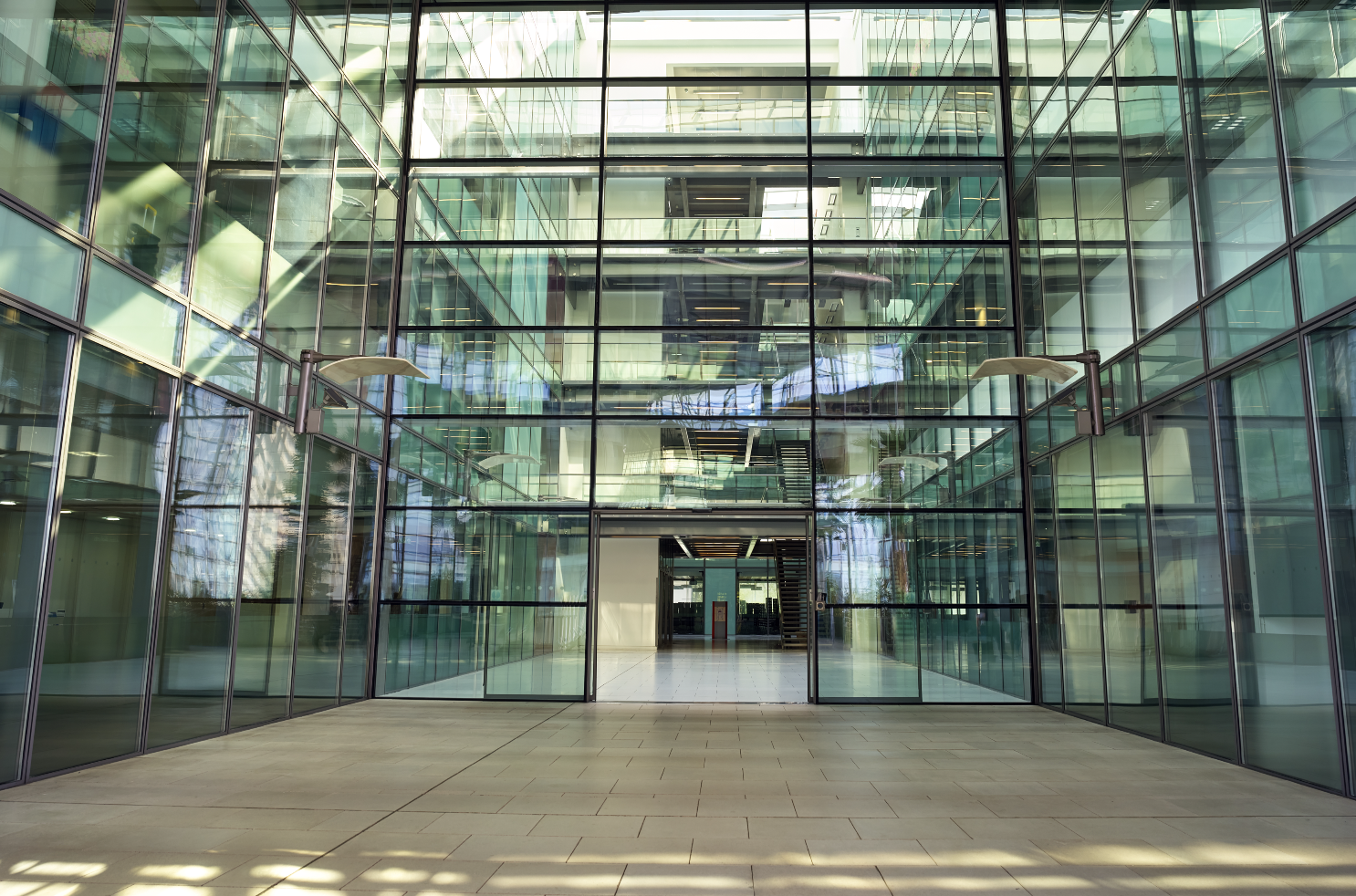
Commercial flooring fails differently than residential flooring — and it fails publicly. A worn traffic lane in front of a Mishawaka retail counter, a coffee-stained patch in an Elkhart office lobby, a slick spot near a restaurant entry in January: these are not just maintenance issues, they are first impressions and liability questions. The good news is that commercial flooring has never offered better tools for the job, from modular carpet tile that repairs itself one square at a time to luxury vinyl built for rolling loads and porcelain that simply refuses to care what walks on it.
At Comfort Flooring, commercial work runs alongside our residential business — we have partnered with businesses across Michiana and Southern Michigan for more than 27 years, serving retail, office, healthcare, assisted living, and hospitality spaces, with projects completed on schedule and with minimal disruption. This guide walks through how we think about a commercial spec: what your industry actually demands, why modular products changed the repair math, what maintenance rhythm keeps a floor presentable, and how to read the spec sheet like a buyer instead of a bystander. The overview lives on our commercial flooring page; this is the working version.
Start with Your Industry, Not the Sample Board
Every industry stresses a floor differently. A showroom needs camera-ready style that survives foot traffic; a clinic corridor cares about cleanability, rolling carts, and quiet; an assisted living common room needs comfort and slip safety in equal measure; a restaurant front-of-house fights spills, salt, and ambiance all at once. Before any product conversation, profile the demands — then let the spec follow.
Retail & showrooms: style that survives the door count
Heavy foot traffic plus camera-ready presentation. We typically lead with commercial luxury vinyl for wood-look durability in sales areas, porcelain tile at entries where salt season hits hardest, and carpet tile in fitting and lounge zones. Along the Grape Road corridor and downtown storefronts alike, entries deserve the toughest spec in the building.
Offices: acoustics first, chairs second
Open plans live and die on sound, and task chairs roll thousands of cycles a year. Carpet tile is the office default for a reason — quiet, modular, and chair-friendly — with commercial LVT for lobbies, kitchens, and corridors that need wipe-clean confidence.
Healthcare: cleanable, rollable, quiet, compliant
Carts, beds, and constant sanitation set the spec: smooth, sealed surfaces like commercial luxury vinyl dominate clinical zones, with carpet tile softening waiting areas. Proper installation to meet warranty and safety standards is exactly the compliance work our commercial team plans for.
Assisted living: comfort, safety, and dignity in one spec
Residents deserve floors that feel residential and perform institutionally: slip-conscious surfaces, forgiving underfoot comfort, easy cleanup, and acoustics that keep common rooms calm. We mix commercial carpet, carpet tile, and LVT zone by zone — comfortable, safe, and attractive flooring for residents, as our commercial page puts it.
Restaurants & hospitality: spill-proof where it counts, warm where it shows
Front-of-house wants ambiance that shrugs off spills — commercial LVP and porcelain carry the traffic lanes and entries, while dining zones can layer in warmth. Winter matters double here: salt and slush arrive on every guest’s shoes from November to March.
The Modular Revolution: Why Carpet Tile Changed Commercial Math
Here is the scenario every facilities manager knows. Year three, someone tips a coffee carafe in the conference room, and the stain wins. With broadloom carpet, your options are live with it, patch it visibly, or replace the room. With carpet tile, the answer is four squares and fifteen minutes. That repairability — plus the ability to lift tiles for access to sub-floor wiring, and to rotate worn walkway tiles before they fail — is why modular carpet dominates offices and common areas. Try it below: the grid is your conference room.
A clean floor. Give it time.
The Hard-Surface Half of the Spec
Where modular carpet ends, hard surface begins. Commercial luxury vinyl — LVT and LVP — has become the corridor-and-lobby standard: wood and stone looks, wipe-clean maintenance, and wear layers built for door counts a home will never see. Porcelain tile remains the entry-zone champion in our climate; nothing handles four months of salt slush with less complaint, and our porcelain collection spans looks from polished to structured. Hardwood and engineered wood still earn their place in hospitality and professional settings where warmth sells, and laminate covers budget-driven refreshes in lighter-duty spaces. All five categories — commercial carpet and carpet tile, LVT/LVP, hardwood and engineered wood, ceramic and porcelain tile, and laminate — are part of our commercial installation practice.
The honest guidance: zone the building, not the brand. Porcelain or LVT where the weather walks in, carpet tile where people sit and think, sealed hard surface where carts roll and cleaning crews need speed. The walkthrough sorts this out fast — and it is free.
The Maintenance Rhythm That Keeps Floors Presentable
Commercial floors rarely die of age; they die of deferred maintenance — specifically, grit that grinds finishes and traffic lanes that never get matting. The fix is not heroic; it is rhythmic. Build the cadence below for your space and see how the work distributes across a week.
Medium traffic: daily vacuuming of lanes and mats, scheduled spot-cleaning, and a monthly deep pass on entries keeps the floor presentation-grade.
Read the Spec Sheet Like a Buyer
Commercial product pages are dense with ratings that actually mean something — and they happen to be the same attributes you can filter in our online catalog. Decode the five that matter most:
Wear layer — the LVT lifespan number
The clear protective film on luxury vinyl, measured in mils. Commercial corridors want the top of the range; what passes in a guest bedroom will not survive a clinic hallway. Ask for the wear-layer spec on every LVT bid — it is the single fastest quality check, and a filterable attribute in our commercial luxury vinyl catalog.
PEI — tile abrasion class
A 0–5 scale for glazed tile wear resistance. Higher classes belong in commercial traffic; lower classes are wall-only. If a tile bid does not state PEI, ask — entries and checkout lanes in this climate chew through under-specified glaze.
DCOF — the slip number your insurer cares about
Dynamic coefficient of friction measures traction underfoot, and it matters most where winter meets your threshold. Wet-area and entry tile should carry appropriate DCOF for the use — one of the compliance details our commercial installs are planned around.
Face weight & density — the carpet truth pair
Face weight is ounces of fiber per square yard; density is how tightly it is packed. Commercial carpet earns longevity from density and construction more than plushness — a low, dense loop outlasts a tall soft pile in any corridor. Both specs are visible on products in our commercial carpet catalog.
Backing — the part you only appreciate later
Commercial carpet tile backings decide moisture behavior, stability, and how cleanly tiles release when it is time to swap. It is also where install method meets warranty — matching backing, adhesive, and subfloor is installer work, and it is why proper installation protects both safety standards and manufacturer coverage.
The Salt-Season Entry Playbook
If we could redesign one zone in every Michiana business, it would be the first fifteen feet inside the door. From the first November salt truck to the April thaw, every customer arrives carrying water, chloride, and grit — and whatever they do not leave at the entry, they distribute across the rest of your floor. The playbook is layered: scraper matting at the threshold to drop the heavy debris, absorbent walk-off matting beyond it to dry the soles, then a hard, moisture-tolerant, slip-conscious surface — porcelain or commercial LVT — before the first carpeted square begins. Each layer halves what reaches the next.
Two details separate businesses that survive winter from businesses that mop all day. First, mat service: saturated matting stops working and starts redistributing, so the cadence of swap-outs matters more than the brand. Second, the transition line: where hard surface hands off to carpet should sit beyond the slush radius, not at the door — a layout decision that costs nothing during design and everything to fix later. We plan entry zones explicitly in commercial walkthroughs because in this climate, the entry is not a detail; it is the spec.
Acoustics: The Spec Nobody Hears Until It Is Wrong
Hard surfaces won the design decade, and plenty of offices and dining rooms discovered the cost: echo. Sound bounces off LVT and tile the way it never bounced off broadloom, and an open-plan office or an assisted living dining room can become genuinely fatiguing when every chair scrape and conversation reflects. The fix belongs in the flooring spec, not in apology-acoustic-panels afterward: carpet tile across open work zones, acoustic-backed products where hard surface is non-negotiable, and soft-surface islands in large rooms to break up reflection. This is a place where zoning pays twice — the same carpet tile that quiets the room is the modular, repairable product facilities teams prefer anyway. If your space hosts residents, patients, or anyone on the phone all day, put acoustic comfort on the criteria list before the sample boards come out; it is one of the five bars in the profiler above for a reason.
Budgeting: Where Commercial Flooring Money Actually Goes
Commercial flooring quotes diverge less on material price than on everything around it: demolition and disposal of the old floor, subfloor preparation, moisture mitigation on slabs, transitions and trim, phasing premiums for after-hours work, and — the line that separates pros from low bids — whether prep was scoped honestly up front or discovered expensively mid-project. When you compare bids, compare scopes: a quote that skips prep is not cheaper, it is incomplete.
Think in lifecycle, not just first cost. A floor that costs more per square foot but survives twice the traffic, repairs by the tile, and keeps its appearance through year ten is the cheaper floor — especially once you price a second installation’s downtime. Modular attic stock, zoned specs that put the armor where the traffic is, and a maintenance rhythm matched to the product are the three quiet levers that stretch a commercial flooring budget further than any discount. Our estimates are free and itemized, so the comparison is yours to make with the full picture in hand.
Concrete Slabs and the Moisture Question
Most Michiana commercial space sits on concrete, and concrete holds moisture — especially in older buildings and anywhere below grade. Vapor pushing up through a slab is the silent killer of adhesives and the source of mystery failures that surface months after installation. The professional answer is unglamorous: test the slab, respect the readings, and specify the right preparation and adhesive system before the first box of flooring arrives. It is standard practice on our commercial installs because warranty compliance demands it — manufacturers write moisture limits into their coverage, and an installation that ignores them is an installation without a safety net. If your building has history — past flooding, a vintage slab, a problem floor that already failed once — say so at the walkthrough. That history changes the spec, and knowing it early is free.
How a Commercial Project Runs with Comfort Flooring
Business flooring cannot close the business. Our commercial process is built around that reality: a walkthrough and free estimate first, product selection matched to zones and budget, then installation scheduled for efficiency — on schedule and with minimal disruption to your operation, as we put it on our commercial page. Phasing, after-hours work windows, and area-by-area sequencing are planning conversations, not surprises. And because we are a local operation with showrooms in Mishawaka and Elkhart rather than a traveling crew, the team that quotes your project is the team that answers the phone in year three when you want six more carpet tiles from attic stock.
It helps that commercial and residential live under one roof here: the same design staff who help homeowners coordinate hardwood, laminate, and tile lines can bring real design thinking to a lobby, a dining room, or a model unit — a 6,000-square-foot showroom is a useful thing when a client wants to stand on the options.
Five Questions to Ask Any Commercial Flooring Bidder
Whether you talk to us or anyone else, these five questions sort serious bidders from low numbers. One: what subfloor preparation is included, and what happens to the price if conditions differ once the old floor is up? Two: will you test slab moisture, and which adhesive system does the spec assume? Three: how will the work be phased around our operating hours, and who coordinates it? Four: which manufacturer warranty applies, and what installation conditions does it require? Five: can we order attic stock with the original dye lot, and will you document the products installed for future repairs? A bidder with crisp answers to all five is planning your floor; a bidder without them is planning an invoice. We are happy to be held to the same list — it describes our process.
Commercial Flooring Questions, Answered
Which industries do you serve?
Can you install around our business hours?
Carpet tile or broadloom for an office?
What should we put at the entries for winter?
Do you handle warranty and safety compliance?
We are a small business — is this overkill for one storefront?
How do we start?
Local Floors for Local Business
From the retail corridors of Mishawaka to Elkhart’s manufacturing offices and the healthcare and university footprint around South Bend, Michiana businesses run on floors that work as hard as they do. Comfort Flooring has been part of that since 1988 — family-owned by Kristy and Roger Rice, with showrooms in Mishawaka and Elkhart and a service area covering Granger, South Bend, Osceola, Goshen, Middlebury, Bristol, Syracuse, and Southern Michigan communities including Edwardsburg, Niles, and Cassopolis. See what clients and homeowners say in our reviews — then let us walk your space, profile the demands, and put a real spec and a real number in your hands.
Your business deserves floors that work as hard as you do — specified zone by zone, installed around your hours, and backed by a local team you can reach in year five. Start with a free commercial walkthrough and estimate.
Schedule Your Free Estimate


