

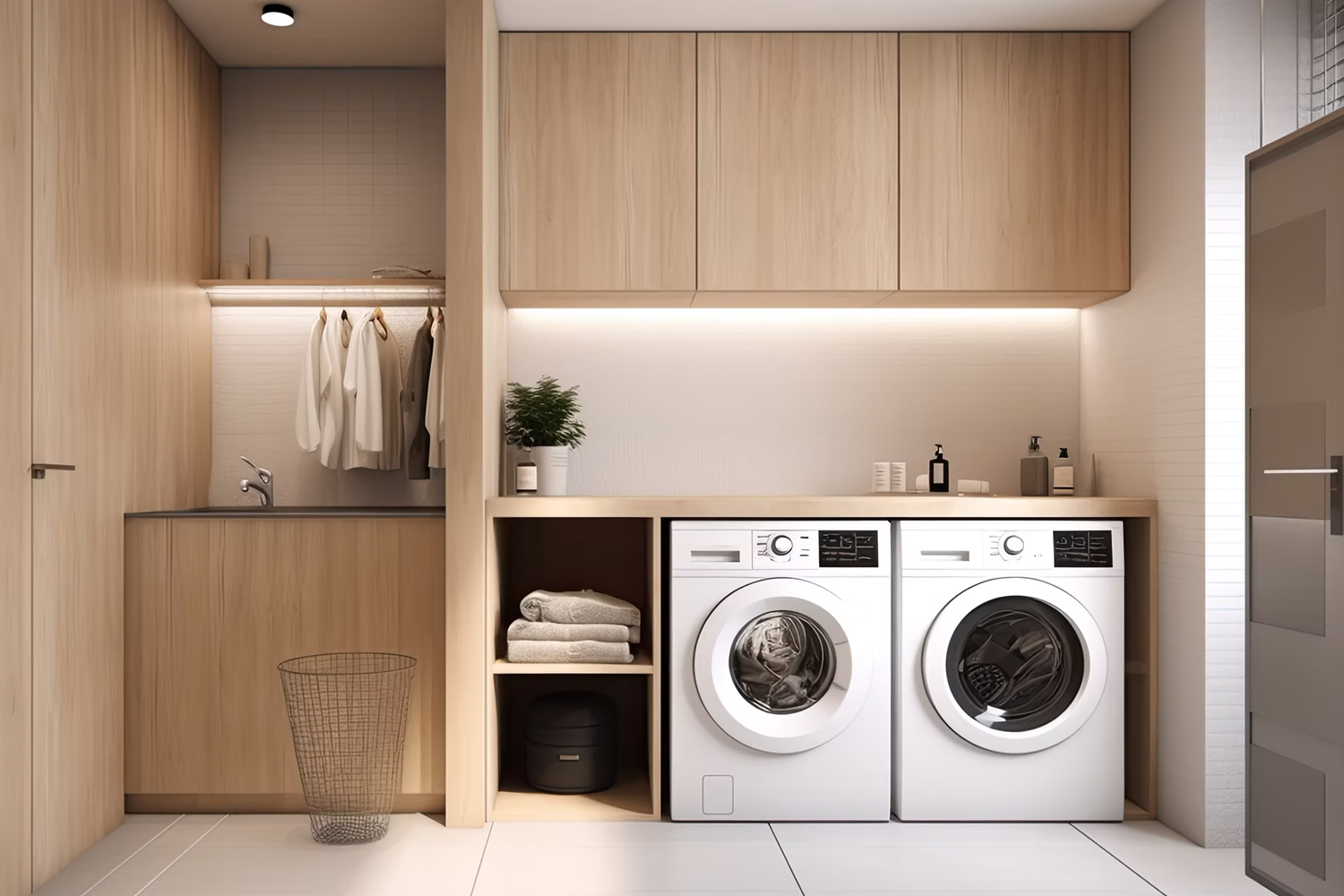
A laundry room is one of the hardest-working spaces in any Michiana home. Between the spin cycles, detergent spills, and the steady humidity coming off a warm dryer, the floor takes a beating most people never think about until it starts to fail.
Choosing between porcelain and ceramic tile comes down to understanding how each handles moisture, traffic, and temperature — and in northern Indiana, the seasonal shifts outside the house affect what happens inside, too.
What Sets Porcelain and Ceramic Apart
Both materials start from clay and get fired in a kiln, but the similarities end there. Porcelain uses finer, denser clay and fires at a higher temperature, producing a tile with a water absorption rate below 0.5%. Ceramic clocks in higher — typically between 0.5% and 3% — making it slightly more porous.
That difference plays out in practical ways. Porcelain resists staining better, holds up to heavier foot traffic, and handles standing water without swelling or cracking. Ceramic costs less up front and cuts more easily during installation, which keeps labor simpler. For a budget-friendly refresh of a guest bathroom floor, ceramic often makes sense. But a laundry room throws more challenges at a floor than most people expect.
The Laundry Room Test
Think about what happens during a typical wash day. The washer hose has a tiny leak you do not notice. The dryer vent kicks warm, moist air into the room. Someone drops a bottle of bleach. The floor deals with vibration, humidity spikes, and occasional standing water — sometimes all at once.
Porcelain tile, with its near-zero porosity, shrugs off that kind of exposure. It will not absorb spilled detergent or warp when the room gets steamy. Ceramic can handle light moisture, but repeated wet-dry cycles in a laundry setting can eventually seep through the glaze into the body of the tile, especially if the grout develops any hairline cracks.
For homeowners weighing their options, browsing porcelain tile rated for high-moisture areas alongside classic ceramic styles side by side makes the trade-offs visible. The density difference is something you can feel.
What Michiana's Climate Adds to the Equation
Northern Indiana winters pull indoor humidity levels down into the 20–30% range as forced-air furnaces run for months. Summers push them back above 70%. That 40-point seasonal swing causes most building materials to expand and contract repeatedly.
Tile handles these shifts better than wood or vinyl, but the substrate matters. A laundry room on a concrete slab — common in basements and newer construction around Mishawaka — stays cooler and can trap moisture. Porcelain's lower absorption rate means it will not wick that ground moisture the way ceramic might over time. For laundry spaces on upper floors, both materials perform well, but the extra density of porcelain adds peace of mind if a washing machine ever overflows.
Understanding how different tile types perform across seasons can shape the whole decision. The team at Comfort Flooring walks homeowners through these factors during tile selection consultations, helping match the right material to the room's real conditions rather than just its look.
Making the Right Call for Your Home
If the laundry room sees daily use, sits on a slab, or shares space with a mudroom, porcelain earns its higher price tag through decades of worry-free performance. If the laundry area is a closet-sized pass-through with good ventilation, ceramic brings solid performance at a friendlier budget.
Either way, professional installation seals the deal. Properly set tile with quality grout and perimeter caulking is what keeps the subfloor dry underneath, and that matters just as much as which clay body you choose.
Ready to explore options for your laundry room floor? Schedule a free estimate at the Mishawaka or Elkhart showroom, and bring photos of your space — the design team will help you compare porcelain and ceramic samples under the same lighting conditions you will live with every day.


