

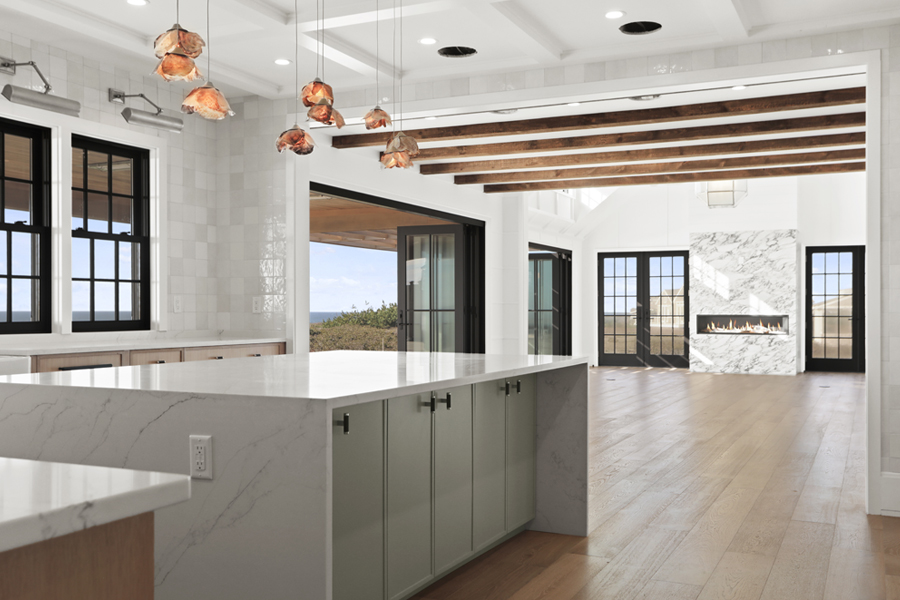
You can tell when lake-effect season really settles in: boots pile up by the door, the dog comes in dusted with snow, and the entryway stays damp all day. That’s exactly when hardwood floors in Michiana homes take the most abuse. Moisture, salt, and big humidity swings can quietly damage beautiful wood if you don’t stay a step ahead.
Below are practical, homeowner-friendly ways to help your hardwood ride out our winters without cupping, gapping, or staining.
How Lake-Effect Winters Stress Hardwood
Hardwood moves with moisture. In January, forced-air heat dries indoor air while melted snow keeps the first few feet inside each doorway almost constantly wet. That combination leads to surface wear, edge curling, and seasonal gaps between boards.
Homes in this region also see some of the widest humidity swings in the country, which is why many families choose engineered hardwood options with more stable cores. These products handle our freeze-and-thaw rhythm better than traditional solid planks, especially in rooms near exterior doors or over unconditioned spaces.
Entryway Tactics: Stopping Salt and Slush at the Door
Most winter damage starts at the entry. Grit from salt and sand acts like sandpaper, while standing water seeps into seams and finish micro-scratches.
Layer your defenses right at the threshold. Use a sturdy outdoor mat to knock off heavy snow, then a super-absorbent indoor mat that covers at least a few boot-lengths of walking. In homes where you love the look of wood in the foyer, it often helps to transition to a small zone of floor-rated tile or luxury vinyl just inside the door, then continue hardwood into the main living area. That way, the highest-traffic “drip zone” takes the hit, while the wood stays drier and cleaner.
Cleaning Routines That Prevent Permanent Damage
How you clean in winter matters as much as how often you clean. Letting slush sit on the surface gives water time to find its way into seams and nail holes, which can leave dark stains or raised edges.
Keep a small towel or microfiber mop near your busiest entrance so you can wipe up puddles as soon as you notice them. When it is time for deeper maintenance, use a cleaner made specifically for hardwood rather than vinegar or steam, which can break down finish faster. If you are not sure what your finish can handle, the hardwood education in Comfort Flooring’s hardwood flooring info section is a good place to start before you buy products.
Managing Indoor Humidity Through the Season
Winter damage is not only about what lands on the surface. When indoor humidity drops under about 30 percent, boards lose moisture and shrink, leading to gaps that may or may not fully close again in July.
A whole-house humidifier on your furnace or a few well-placed room units can keep levels in a more wood-friendly range. If you are planning new floors, the design team at Comfort Flooring often steers clients toward white oak hardwood collections or other species known for stability in our climate, especially in older homes where insulation and air sealing vary from room to room.
Planning Future Projects with Winter in Mind
If you are updating floors in an established home in South Bend or Granger, it pays to think about winter at the planning stage rather than after the first thaw. That might mean pairing a durable mudroom surface with warm hardwood in adjacent spaces, or choosing Shaw hardwood styles that coordinate with more moisture-resistant materials in nearby baths and entries.
Comfort Flooring has been helping Michiana homeowners make those kinds of decisions since 1988, and the team is used to designing around lake-effect realities, not showroom-perfect conditions. If you are considering new hardwood and want it to look just as good after many winters as it does on install day, you can schedule a design-focused flooring consultation to talk through your home’s specific layout, traffic patterns, and climate challenges.


